How to read your dog
Type your pet's name on the map and every guide uses it.
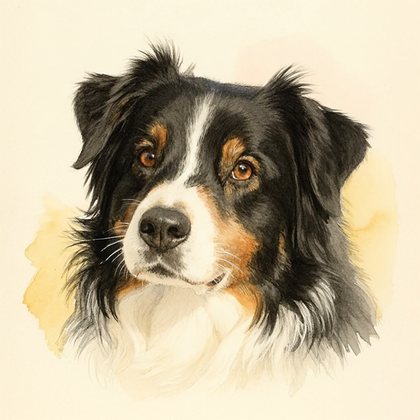
Read the whole dog, not one signal. Whale eye, yawning or lip licking with a tight mouth, ears pinned back, a tucked or rigid tail, turning away and freezing can mean a dog is stressed, so give space. A wagging tail means the dog is emotionally aroused, not always happy. The "guilty" look is a response to the person, not guilt. The real dog shows up over the settling weeks.
The "guilty" look is not guilt. In Horowitz's 2009 study, dogs showed the guilty posture when their owners scolded, whether or not the dog had done anything. Scolding after the fact is usually ineffective and can backfire.
What to do
- Look at the whole dog.Eyes, mouth, ears, tail and body together, and what is happening around the dog. One signal alone can mislead.
- Learn the stress cluster.Whale eye, a lot of white around the eye. Yawning or lip licking with a tight mouth or a gaze turned away. Ears pinned tightly back. A tail tucked between the rear legs, or held rigid. Drooling when no food is around.
- Treat these as "stop".Turning away, stiffening, freezing or trying to leave: give space, and never corner a dog, because a cornered dog may give one quick snap. A growl is a warning, so never punish it.
- Don't read a wag as "friendly".A slow, sweeping, whole-body wag usually means relaxed. A faster, stiff, twitchy wag signals higher arousal. The same wag can mean happy in one dog and anxious in another.
- Give the real dog time.Personality shows in the settling weeks, so don't judge your pet from the first days. Watch the dog, not the calendar.
- Reward, don't punish.Reward what you like. Shouting, leash jerks, staring and prong, choke or shock collars are linked to more fear and aggression. If you see growling, snapping or stiffening, ask early: a reward-based trainer or a veterinary behaviorist.
Your job
Keep your toys and shoes up high.
Did you know?When a dog puts its front end down and its bottom up in the air, it's saying, "Let's play!"
A relaxed dog looks loose: soft eyes, an easy mouth and a slow, sweeping wag of the whole body. A dog who sniffs, walks away and comes back later is doing it right.
Stiff, wide-eyed and tight-mouthed is not settling in, so give more space. A dog who is still anxious at about three months should see a trainer or vet.
A dog who is still anxious at about three months should see a reward-based trainer or a vet. If anything about your dog's health worries you, call your vet first.
Two things we never repeat
This moment is in our Welcome Home picture book
Our read-aloud book turns the first weeks into a story your child can follow. It is in the works. About the book
Sources: ASPCA (2) · AKC (2, 3) · AVMA · AVSAB · Whole Dog Journal · RescueDogs101. Full list